Universities are developing innovative learning materials

The Project starts

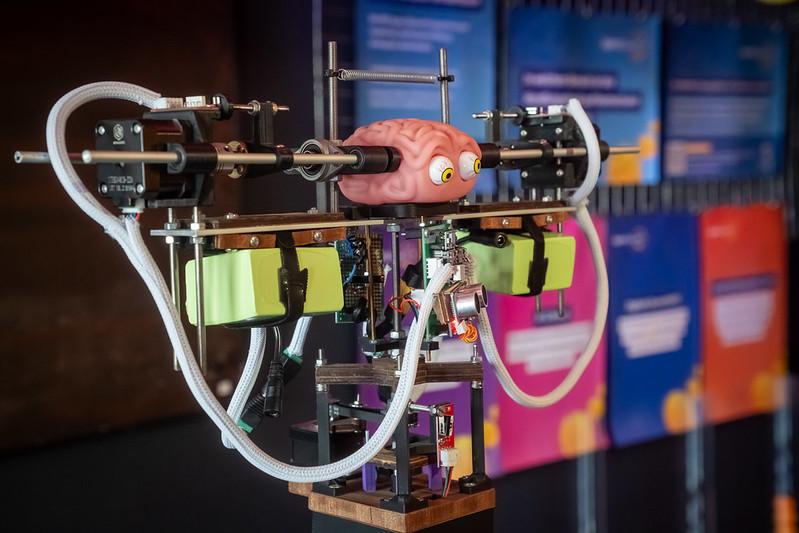
How can aesthetically arranged materials open up new learning spaces for children? This question forms the starting point for the inter-university project ‘MAKE – Material Worlds in the Maker Space’. The aim is to develop innovative and practical learning materials and a forward-looking learning environment for children. To this end, HAWK in Hildesheim and HAW Kiel are pooling their expertise in the fields of design and early years education.


At the heart of MAKE lies the development of innovative learning materials, in particular ‘material buffets’ and ‘learning trays’, which combine aesthetic quality with educational value. Creative practice and academic research go hand in hand in this project. Students from the fields of design and early years education collaborate on an interdisciplinary basis and actively contribute their perspectives to the development process.

How can aesthetically arranged materials open up new learning spaces for children? This question forms the starting point for the cross-university project ‘MAKE – Material Worlds in the Maker Space’. The aim is to develop innovative and practical learning materials and a forward-looking learning environment for children. To this end, HAWK in Hildesheim and HAW Kiel are pooling their expertise in the fields of design and early years education.

“A key feature of MAKE is its participatory approach: students of design and early years education are actively involved in the development, testing and evaluation of the materials. This transforms the project into a space for learning and professional development, where future practitioners and designers can broaden their professional perspectives and contribute to real-world development processes,” explains project leader Prof. Lena Sophie Kaiser.

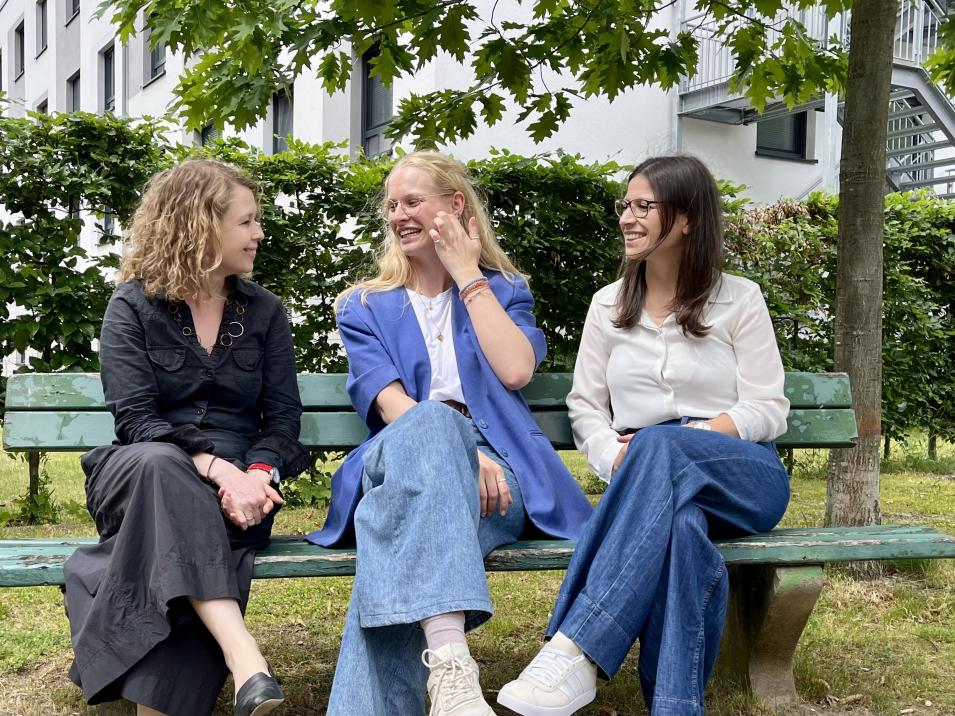
The project is led by Prof. Lena Sophie Kaiser from the Early Years Education programme at the HAWK Faculty of Social Work and Health in Hildesheim, together with Prof. Kathrin Hormann from the Early Years Education programme at Kiel University of Applied Sciences (HAW Kiel) and Prof. Franziska Junge from the Graphic Design specialism at the HAWK Faculty of Design in Hildesheim. Together, they are responsible for the academic, pedagogical and strategic direction of the project.

MAKE is given a particular boost by the collaboration of three research assistants with complementary specialist backgrounds: product designer Mia-Marie Henze contributes her creative expertise to the development of the materials and ensures that they are aesthetically compelling. Dr Natalia Zalipyatskikh, from the field of literary studies, adds an analytical and reflective dimension to the project and, in particular, strengthens the empirical analysis of the results. Özge Deviris, an educational scientist specialising in early years education, is responsible for the areas of materials pedagogy and teaching design, and oversees the development, implementation and evaluation of the ‘learning buffets’ and materials in close integration with the project process.

“Our collaboration opens up an interdisciplinary perspective in which design, research and educational practice interlock productively and sustainably expand teaching and learning practices. With MAKE, we are designing learning spaces that combine creativity, design and educational innovation, with the aim of developing practical and sustainable educational resources,” explains Özge Deviris.

The project is testing the prototypes it has developed in nurseries and primary schools in Hildesheim and Kiel, whilst also providing scientific support and continuously optimising them. The Maker Space serves as the central hub for development, testing and exchange.

The aim of the project is to explore new avenues in early years education and to provide lasting impetus for practice through creative and collaborative approaches.

The ‘Foundation for Innovation in Higher Education’ is funding the project, which will run until 31 March 2028.
Materiality and visual narration in dialogue

Project MAKE gains impulses for aesthetic pedagogical education processes

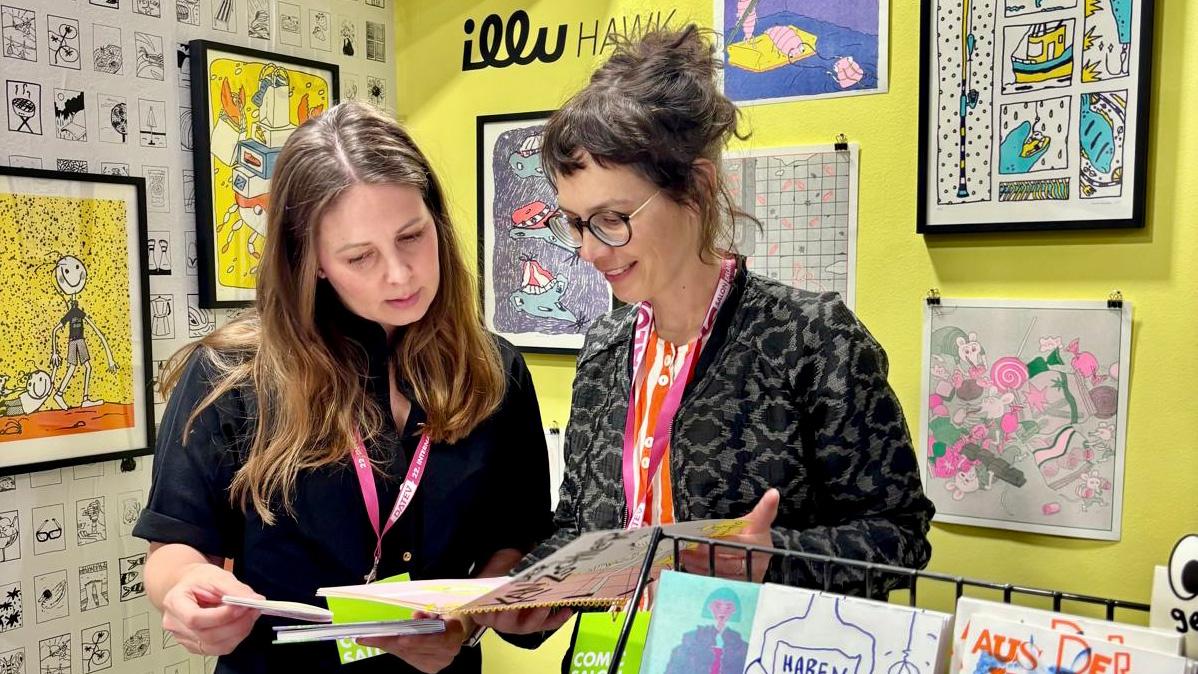
How can materiality and visual narration be productively interwoven in aesthetic and educational contexts? This question was explored by Professor Franziska Junge from the Faculty of Design and Dr Lena Sophie Kaiser from the Faculty of Social Work and Health at HAWK University of Applied Sciences and Arts Hildesheim/Holzminden/Göttingen during their visit to the Erlangen International Comic Salon.


The Erlangen International Comics Festival is one of the key platforms for comic art, graphic literature and visual storytelling in the German-speaking world. With its interdisciplinary programme of exhibitions, readings, discussion events and workshops, the festival also serves as a forum for reflection on current artistic, social and educational issues.

With this in mind, the project’s stay in Erlangen marked the start of „MAKE – Materialworlds in Maker Space“ HAWK offers a wide range of specialist perspectives. The discussion centred on the question of how image, material, space and narration interrelate in aesthetic and creative educational processes. In this context, visual narratives can be described as fundamental modes through which children come to terms with the world: by linking pictorial, material and scenic forms of expression, children structure their experiences, develop interpretations and expand their imagination.

In this context, the visit took on particular significance within the framework of the Comic Salon’s children’s and family programme. Through the ‘Children Love Comics’ programme, the festival creates dedicated spaces for aesthetic practice, in which young visitors are actively involved in creative processes via workshops, open studios and hands-on activities. These formats serve as prime examples of how low-threshold approaches to combining narrative and materiality can be designed, thereby offering concrete starting points for the further development of the MAKE project.

“The Comic Salon has impressively demonstrated how visual narration can act as a unifying element between materiality, space and educational processes. In particular, the openness of the formats and their focus on independent creative practice provide us with significant inspiration,” explains Prof. Franziska Junge.

MAKE brings together perspectives from design, early years education and higher education pedagogy. The aim is to develop innovative teaching and learning formats that interweave open-ended exploration, creative practice and inquiry-based learning. The insights gained in Erlangen underscore the central importance of interdisciplinary input for the design and further development of such educational spaces.

Overall, it is clear that the International Comics Salon serves not only as a forum for current developments in visual culture but also provides a productive frame of reference for the question of how aesthetic practice, materiality and narration can be systematically and sustainably linked within educational contexts.

Future Skills in Focus

The University:Future Festival 2026 opens new Perspectives

What strategies do universities need to remain capable of taking action in times of profound change? The University Festival 2026, held under the theme ‘Under Pressure’, addressed this question. The event was organised by the Higher Education Forum on Digitalisation, the Foundation for Innovation in Higher Education Teaching and the Stifterverband. Özge Deviris took part as a research assistant on the MAKE – Material Worlds in the Maker Space project and gained valuable insights for the project’s further development.


The festival highlighted the extent to which higher education institutions are caught between the pressure to change and the opportunities to shape the future. Key themes included digitalisation, social change and new demands on learning processes. Particular emphasis was placed on future skills such as critical thinking, problem-solving, creativity, collaboration and a reflective approach to new technologies. These skills are considered crucial for preparing students for complex working and living environments and are developed particularly well in flexible, practice-oriented and interdisciplinary learning settings.

Current skills and learning frameworks in the context of transformative higher education take up these approaches: they emphasise action-oriented learning, self-efficacy and the integration of theory and practice. At the same time, it has become clear that whilst there is a strong desire for interdisciplinary collaboration, structural constraints often limit it. A key question for higher education development therefore remains: where can spaces be created in which interdisciplinary can actually be put into practice?

These perspectives are particularly relevant to MAKE, as the project focuses precisely on these areas of overlap. The Maker Space provides an experimental learning environment in which students can put ‘future skills’ to the test in a practical way, through independent project work, interdisciplinary collaboration and exploratory work with materials. Open formats make it possible to make complex content accessible and to develop new ways of thinking and working.

Taking part in the festival provided an opportunity to discover and reflect on current developments and approaches from the higher education and maker communities. In particular, insights into resilient learning environments, innovative teaching methods and skills development provide important impetus for MAKE. The exchange with stakeholders from academia, society and the professional world also opened up new prospects for collaboration.

Against the backdrop of the theme ‘Under Pressure’, the significance of the Maker Space as an open space for learning and experimentation becomes particularly apparent: ‘It is precisely during periods of heightened pressure for change that it becomes clear how essential spaces are that enable exploration and creative experimentation, as well as the critical rejection of approaches and the development of new perspectives. Maker Spaces create the necessary freedom for this, both figuratively and physically, and thus make a significant contribution to sustainable higher education,” said Özge Deviris.

Children's university as an educational and testing room

Interdisciplinary cooperation between childhood education and design

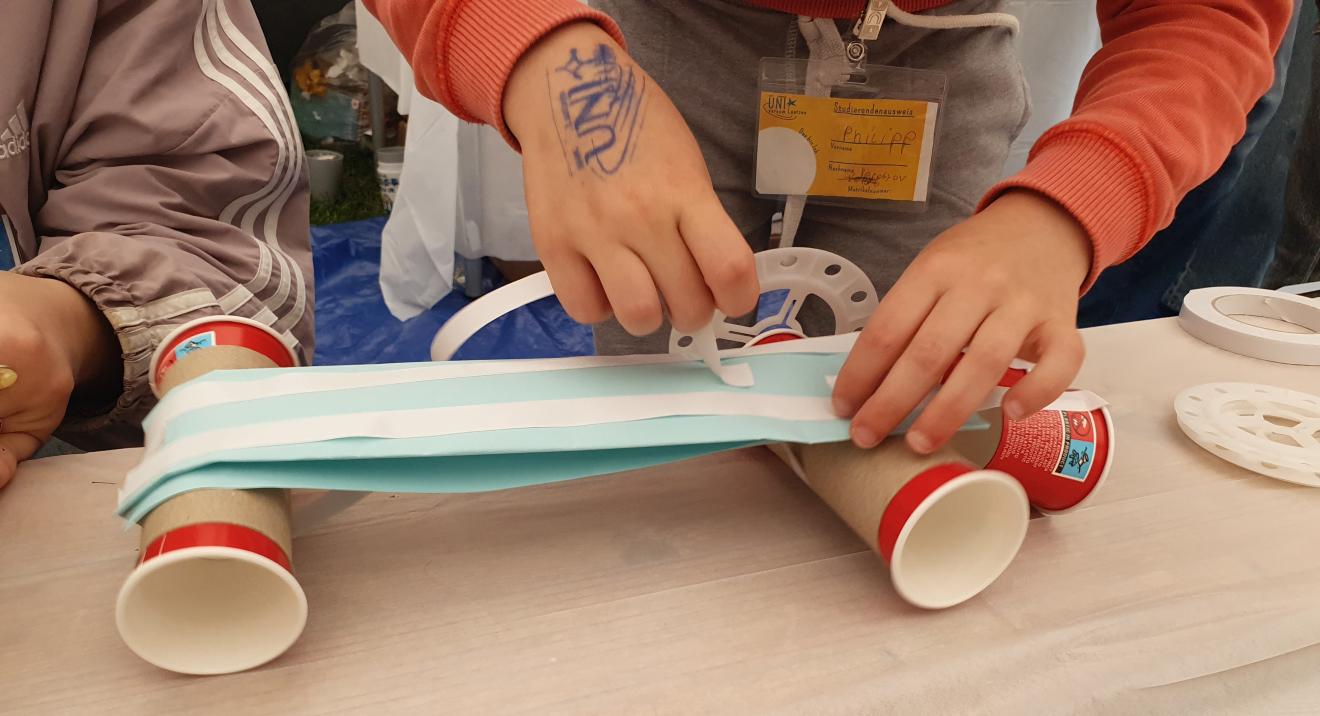
As part of the ‘Kinder-Stadt Laatzen’ holiday project, the Children’s University became an educational and experimental space for the ‘MAKE’ project run by HAWK University of Applied Sciences and Arts Hildesheim, Holzminden, Göttingen. The focus was on how children develop their own ideas, make creative decisions and explore their environment through inquiry when presented with open-ended arrangements of materials. The Children’s University thus combined a public educational programme with a university-level teaching and research setting.


The concept is based on approaches from maker education: learning is understood as an active, material-based and co-constructive process. Clay, wire, natural materials, sponges, paints and other open-ended materials are not provided for specific products, but are arranged as ‘material buffets’. This gave the children the freedom to explore, construct, discard and further develop their own solutions.

The activities at the Children’s University were organised by the three HAWK faculties: Social Work and Health, Design, and Building and Conservation. Student ID cards, faculty stamps and a Children’s University diploma allowed the children to experience the university atmosphere in a playful way. After visiting at least two faculties, the children received their diploma, which conferred special privileges within the Children’s City.

A key feature was the interdisciplinary collaboration between students of early years education and design. The early years education students contributed their knowledge of children’s learning processes, participation and educational interaction. They closely supported the children, responded to their questions and ideas, and offered guidance without dictating creative approaches. Design students focused on materiality, form, colour and presentation. They developed aesthetically stimulating arrangements and introduced the children to various design processes. Through the collaboration between the two disciplines, educational and design perspectives were brought into dialogue and further developed together.

Observations showed that ideas often only emerge through hands-on activity. A child’s remark – ‘I’ve no idea, I’m just doing it’ – therefore does not indicate a lack of planning, but rather an exploratory approach: the properties of materials are perceived, possibilities are tested and decisions are reached step by step. The students were able to observe such processes first-hand, interpret them from a professional perspective and reflect on their own actions. The Children’s University thus became both a learning space for children and a practical, university-level teaching experience for the participating students.

The project team documented the activities through participant observation as well as photographs and video recordings, in accordance with the consent forms provided. Selected works were also digitally edited using the ShatterPix app: the children photographed their objects and added short spoken messages. This combined hands-on experiences with materials with digital forms of expression.

The Children’s University highlights the potential of open learning environments as spaces for education, teaching and research. Children experience a sense of self-efficacy by pursuing their own questions and generating knowledge through their engagement with materials. At the same time, students from both disciplines practise interdisciplinary collaboration and develop a nuanced understanding of how pedagogical support, the selection of materials and the spatial and aesthetic design of spaces influence educational processes.

Support

The aim of the project is to explore new avenues in early years education and, through creative and collaborative approaches, to provide lasting impetus for practice.

The ‘Foundation for Innovation in Higher Education’ is funding the project, which will run until 31 March 2028.